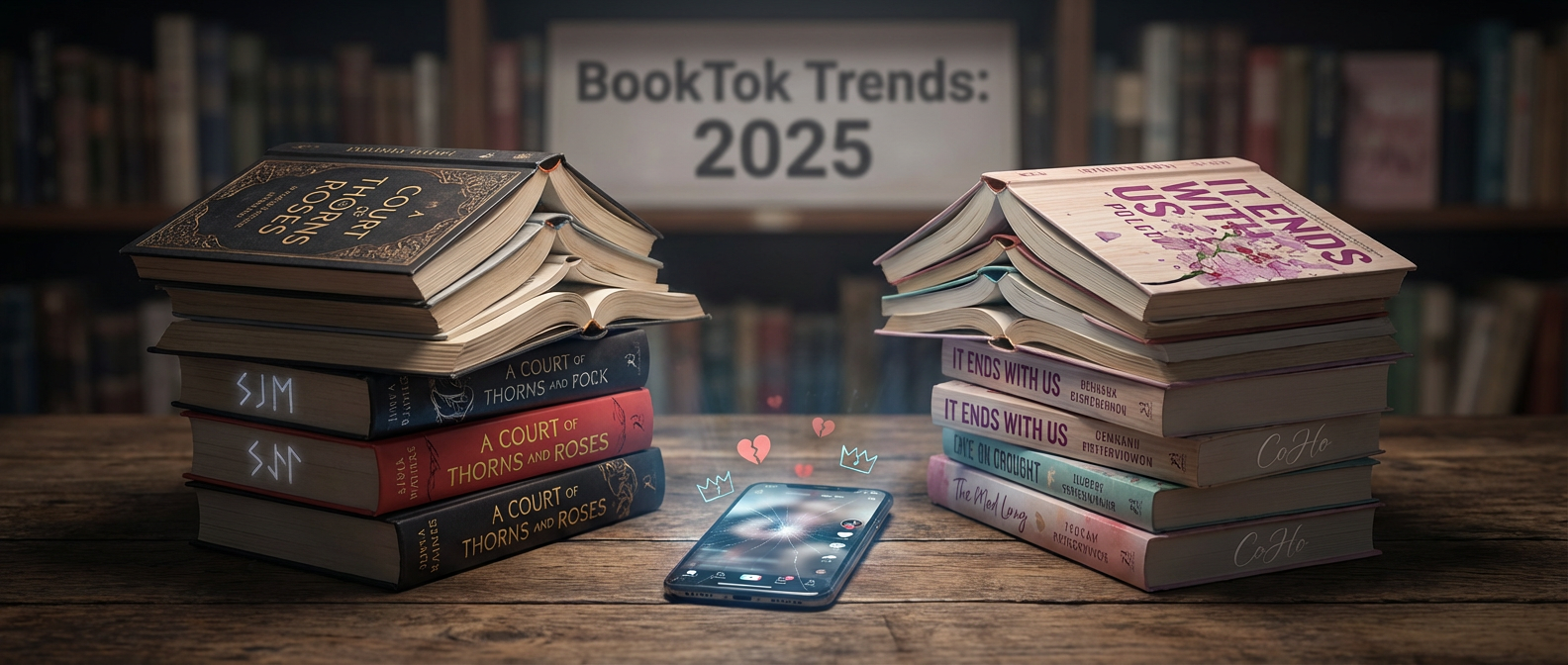
Romantasy Is Eating Itself: The Fandom Backlash Against Sarah J. Maas Clones and What It Means for the Genre in 2026

The Numbers Don’t Lie, But They’re Exhausting

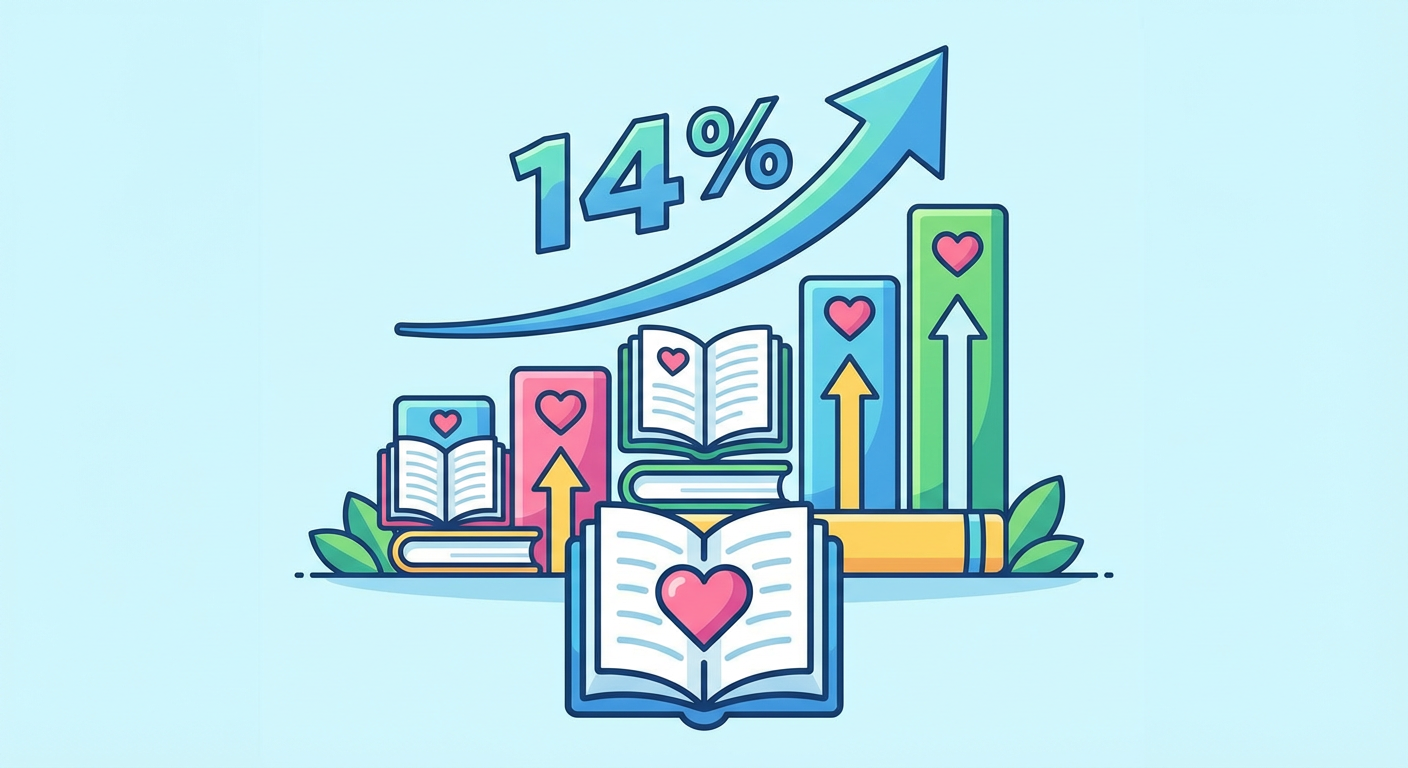
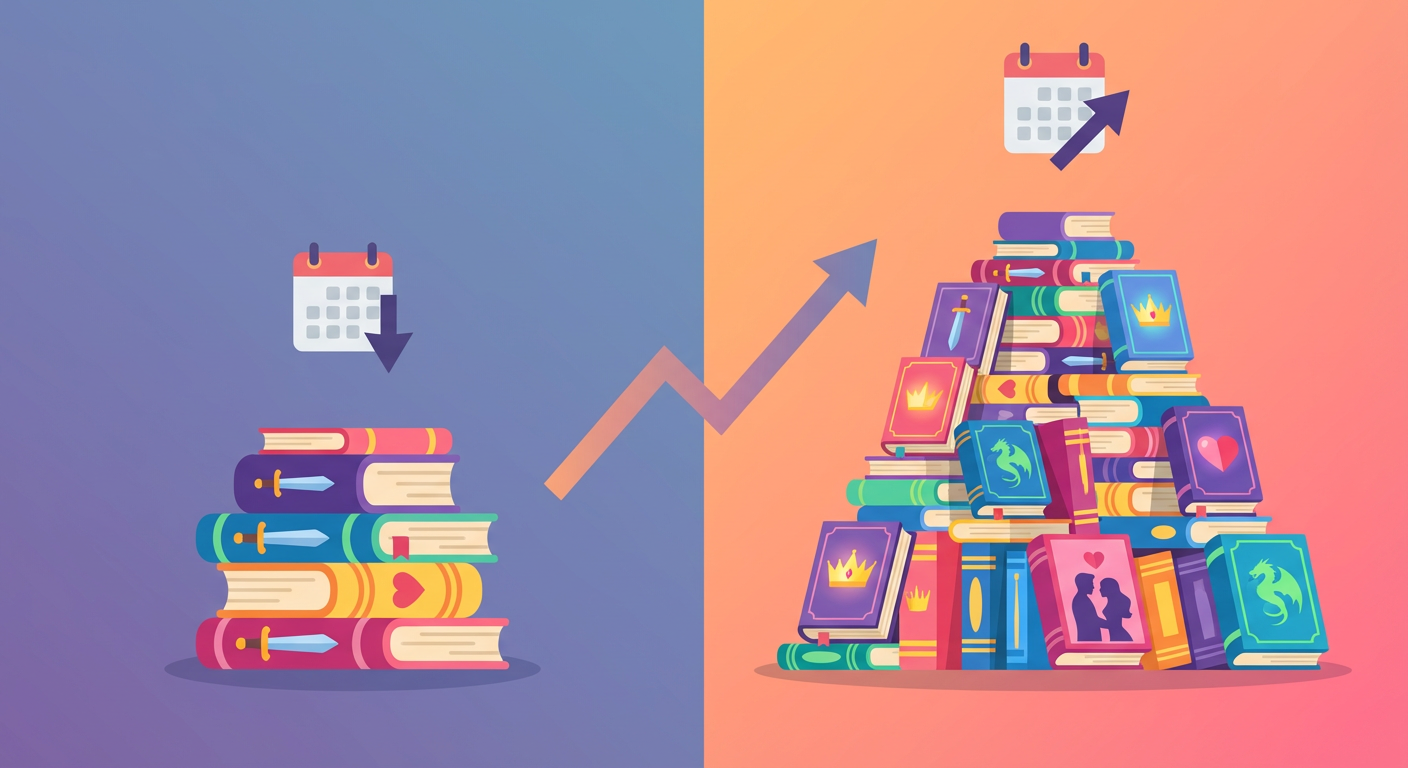
Here’s what happened between 2019 and 2025: romantasy exploded. Like, actually exploded. We went from a solid if niche category to a full-blown publishing arms race. According to Publishers Weekly 2025 genre fiction report, over 400 romantasy titles hit shelves in just the last two years alone. That’s a 600% increase from the previous six-year period. Six. Hundred. Percent.

Romantasy Is Eating Itself: The Fandom Backlash Against Sarah J. Maas Clones and What It Means for the Genre in 2026

Sarah J. Maas didn’t invent romantasy, but let’s be honest about what happened here. Bloomsbury Publishing investor reports noted that her combined series sales crossed 50 million copies worldwide by 2025. Fifty million. When one author’s backlist is basically the entire GDP of a small country, every publisher on Earth suddenly gets very interested in what she’s doing. Every publisher means every agent, every acquisition editor, every marketing team. Suddenly everyone is writing their version of found family in a high fantasy world with a girl who maybe didn’t know her own strength.

The problem is obvious now. It was obvious then too, if we’re being honest. You can’t scale lightning. You especially can’t scale it through a template.

Illustration for Romantasy Is Eating Itself: The Fandom Backlash Against Sarah J. Maas Clones and What It Means for the Genre in 2026

What Readers Actually Said, and Why Publishers Should Have Listened

Goodreads has become basically a public record of what’s working and what’s brutally, visibly failing. In 2025, romantasy saw 31% more negative reviews citing formulaic plots compared to any other genre category. That’s not a small variance. That’s not “some readers felt the pacing dragged.” That’s a significant portion of your audience actively telling you the product feels mass-manufactured.

The thing about genre readers is they’re honest in a way that literary fiction readers sometimes aren’t. Maybe it’s because genre is often treated as lesser, so there’s less pressure to perform sophistication. Maybe it’s because genre readers are there for a specific experience and they know immediately when they’re not getting it. Either way, they review with surgical precision. They don’t say a book is bad because it’s emotionally manipulative. They say it’s bad because it hits the same emotional beats at the same page counts as the last four books they read, and they can predict the plot turns because they’ve lived this exact story before.

Publishers saw these reviews. They definitely saw them. What they did with that information is the real story.

BookTok Declared War (Quietly, But Decisively)

Nothing kills a genre faster than being declared tired by the people who were supposed to love it most. In late 2025, BookTok creators with massive followings dropped the #PostRomantasy hashtag like a gauntlet. The hashtag generated over 400 million combined views. That’s not a debate. That’s a verdict.

What made this interesting wasn’t just the rejection. It was the recommendation. These creators weren’t telling people to quit reading. They were telling them to go elsewhere. Dark academia. Literary horror. Fantasy that doesn’t hinge everything on the romantic subplot. Romantasy didn’t fail because readers stopped wanting romance and fantasy together. It failed because readers wanted more variation, more risk, more actual authorial voice.

The #PostRomantasy movement was almost compassionate, weirdly. Like watching someone you care about run themselves into the ground and gently suggesting they take a break. The influencers weren’t being cruel to authors. They were being cruel to a publishing industry that had taken something readers loved and flattened it into assembly-line product.

The Publishers Are Already Pivoting (And Admitting It)

By early 2026, the major publishing houses were making their moves. Tor Books and Orbit both announced new acquisition lists specifically described in trade press as “romantasy-adjacent but subversive.” Subversive. That’s an interesting word choice. That’s a word that means “we know what you’re tired of, and we’re not doing that.”

This is honestly the healthiest sign the genre has shown in a few years. Publishers admitting saturation is one thing. Publishers publicly committing to something different is another. It means they’re listening. It means they understand that readers can taste the difference between a book written with genuine creative conviction and a book written with quarterly sales targets.

The Maas model will never go away. Her books will keep selling because the books are genuinely good, and because she’s still taking risks even when her imitators aren’t. But the genre fatigue is real, it’s measurable, and it’s already producing change in real time.

What This Actually Means for Readers Moving Forward

Here’s what I think is happening underneath all the numbers and hashtags and publisher announcements: genre readers are growing up. They’re not abandoning what they love. They’re refusing to accept diminished versions of it. They’re saying that romance matters, that fantasy matters, that the combination matters, but they also matter. Their time matters. Their intelligence matters. Their desire for something that hasn’t been mass-produced six hundred times matters.

The romantasy genre isn’t dying. It’s filtering. The books that survive this moment will be the ones with something to say beyond “girl finds power, girl finds love, girl saves world in that order.” The rest will fade into remainder bins and become that thing your friend swears isn’t actually bad, you just have to find the right one.

I’m genuinely curious what happens next. Whether the publishers actually follow through on “subversive romantasy” or whether that’s just marketing speak. Whether authors will feel freed by lower sales pressure to take real risks or whether they’ll panic and write even safer books. Whether readers will actually move to dark academia or whether they’ll just be louder about wanting good romantasy instead of mediocre romantasy.

What books have you been reaching for lately instead of your usual reads? Have you hit that romantasy wall, or do you think the best is still to come?

BookTok’s 2026 Reckoning: When the Algorithm Stops Being Your Bestie

The Platform That Made Everyone a Critic Is Having an Identity Crisis

BookTok promised us something intoxicating: a place where obscure fantasy romance could topple literary classics, where a seventeen-year-old in Ohio could convince millions to ugly-cry over the same book, where reading wasn’t gatekept anymore because the algorithm didn’t care about your credentials. It was revolutionary. It was also, apparently, temporary.

BookTok's 2026 Reckoning: When the Algorithm Stops Being Your Bestie
BookTok’s 2026 Reckoning: When the Algorithm Stops Being Your Bestie

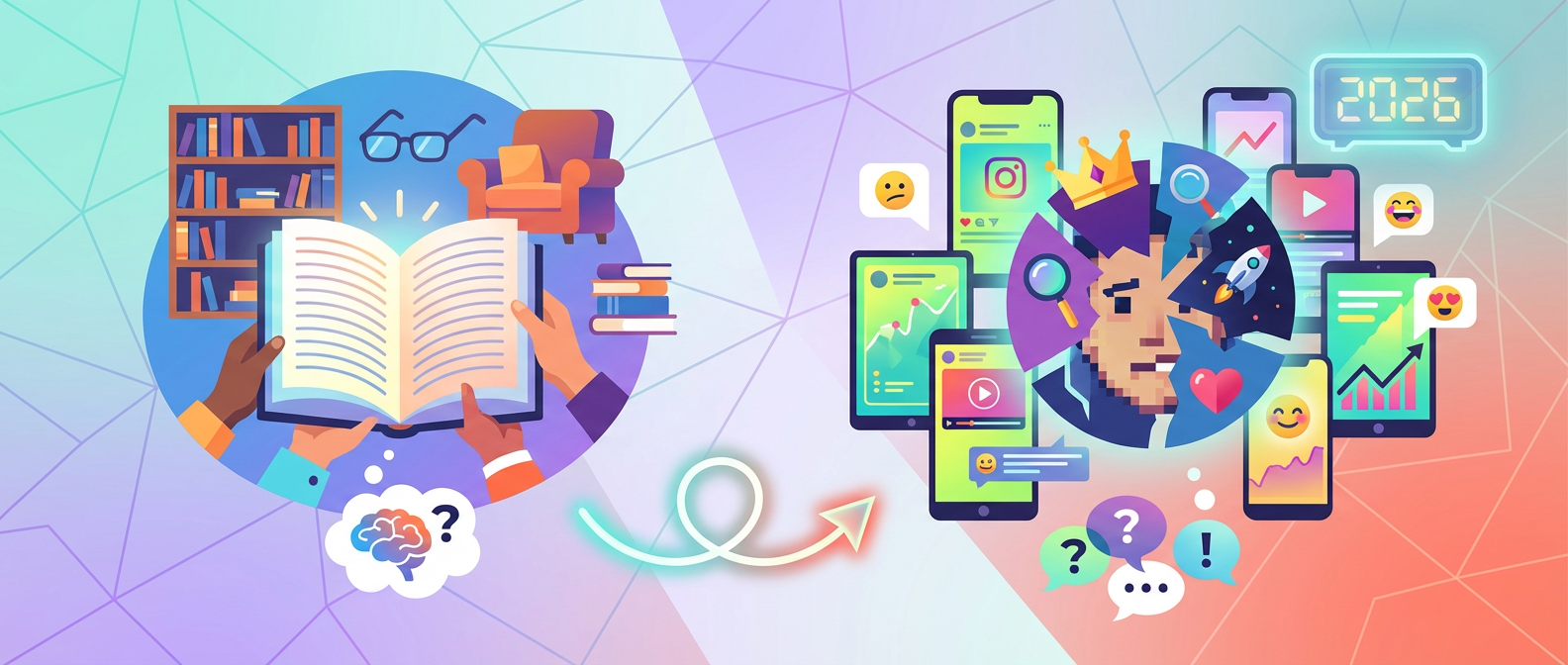
By early 2026, the whole ecosystem is experiencing a full-blown identity crisis. And I’m not being dramatic. The TikTok legal battles brewing throughout 2025 and into this year have fundamentally destabilized the community that BookTok built. According to social media analytics data, creator followings dropped between 20 to 30 percent as users hedged their bets and migrated to other platforms. That’s not a minor shift. That’s an exodus wearing a bookmark like a flag.

Here’s what’s wild: we actually got what we asked for. We wanted books to be social. We wanted reading to feel less lonely. We wanted the barrier to entry demolished. BookTok did all of that. And now that the platform itself is in crisis mode, we’re scrambling to figure out what BookTok even is when the Tok part becomes unstable.

Illustration for BookTok's 2026 Reckoning: When the Algorithm Stops Being Your Bestie
Illustration for BookTok’s 2026 Reckoning: When the Algorithm Stops Being Your Bestie

The Great Platform Migration and What It Reveals

When users panic, they diversify. Goodreads saw a 15 percent spike in new sign-ups right at the beginning of 2025 as readers scrambled to establish themselves on platforms that felt safer, more permanent. Bookstagram held steady. YouTube BookTube gained traction. But here’s the thing nobody’s talking about enough: these platforms have completely different constraints, and those constraints are reshaping what kinds of books get discovered and championed.

TikTok’s vertical video format, its 15 to 60-second sweet spot, its algorithm that rewards immediate emotional hooks and relentless editing—all of that created a specific kind of book magnetism. It rewarded books with big feelings and snappy premises. It made romantic tension graphable. It turned plot twists into meme-able moments. Bookstagram’s grid-based aesthetics, meanwhile, reward beautiful covers and cohesive visual storytelling. YouTube’s longer format rewards deep dives, actual criticism, and the kind of recommending where you can explain your reasoning for more than forty-five seconds.

When the future of BookTok after TikTok’s US crisis became a genuine conversation in publishing houses, the major publishers didn’t mourn. They recalculated. Penguin Random House and others shifted their influencer budgets toward Bookstagram and YouTube in their 2025 quarterly reports. Translation: they’re betting on platforms where they can measure impact differently and where the aesthetic is more controllable.

The Numbers Tell a Story About Engagement, Not Reach

The BookTok hashtag had racked up over 250 billion views by late 2025. That sounds enormous until you realize engagement per video is dropping significantly compared to the 2023 peak, when BookTok felt genuinely electric. More reach, less actual interaction. It’s like watching a concert venue get bigger but quieter.

According to a Pew Research Center reading habits study from 2025, 35 percent of adults under thirty who read for pleasure discovered their last book through social media. TikTok and Instagram were basically tied at the top. But that statistic deserves scrutiny. It doesn’t tell us whether those discoveries are sticking, whether they’re converting to actual purchases, whether they’re creating the kind of passionate communities that made BookTok feel special in the first place.

What’s really happening is fragmentation. The community that felt cohesive when it was concentrated on one app is now scattered. Some people are on Threads. Some are riding it out on TikTok despite the uncertainty. Some have retreated to Reddit’s book communities or private Discord servers. Some are genuinely just going back to Goodreads and reading reviews from strangers on the internet like it’s 2008 again. The sense of collective discovery is fractured.

Genre Hierarchies Are Getting Weird in This New Landscape

Here’s what I’ve been thinking about obsessively: the platform migration is collapsing the temporary genre equality that BookTok created. For a hot minute, BookTok treated Colleen Hoover with the same serious respect as Sally Rooney. Paranormal romance got the same algorithmic attention as literary fiction. BookTube, Bookstagram, and Goodreads are more stratified. They have embedded hierarchies. YouTube BookTubers tend to lean toward long-form analysis and literary depth. Bookstagrammers lean toward pretty covers and aesthetically appealing narratives. Goodreads is… Goodreads, which is its own completely unhinged ecosystem.

What concerns me is that we might be losing something genuinely valuable here. BookTok’s greatest gift wasn’t necessarily that it made reading popular again. It’s that it refused to rank genres by prestige. A cozy mystery could trend the same way a psychological thriller could. A sapphic romance could get the same passionate defense as a new literary debut. The algorithm didn’t care about your English teacher’s opinion of what counted as “real literature.”

Now? Publishers are being more strategic about budget allocation. That means some genres are going to get pushed harder on platforms where they photograph well. Some are going to get abandoned because they don’t fit the vertical video format. Some will flourish in YouTube essay comment sections but disappear from mainstream discovery entirely.

What Comes Next Matters More Than Where It Happens

The identity crisis BookTok is experiencing right now isn’t really about TikTok at all. It’s about whether the community that formed can survive platform diaspora. It’s about whether the democratized discovery that felt so different in 2023 and 2024 can exist in a more fragmented landscape. It’s about whether we actually built something sustainable or just rode a wave.

My honest assessment? We’re at an inflection point. The platform migration has given us weird, unintended consequences. Engagement rates are dropping even as reach persists. Creator communities are splintering. Publishers are hedging their bets. But readers are still here. They’re still desperately looking for ways to connect over books. They’re still seeking out communities that feel genuine and non-hierarchical and welcoming to all kinds of stories.

The question isn’t whether BookTok will survive TikTok’s legal battles. The question is what shape book community takes when it’s no longer concentrated on a single app with a single algorithm. And whether we’ll figure out how to preserve the best parts—the genuine enthusiasm, the cross-genre respect, the feeling that you belong in this community no matter what you love to read—while we’re all scattered across different platforms with different constraints and different rules.

What’s your experience been? Have you found your book community on a new platform, or are you still bouncing between apps trying to figure out where to land? I’m genuinely curious how readers are adapting to this moment.

The Books That Beat Me: A DNF Confession

The Shame Spiral of Page 47

I’m staring at The Luminous Dead by Caitlin Starling, bookmark wedged at page 47 like a tiny white flag of surrender. It’s been three weeks since I touched it. The sci-fi horror premise hooked me instantly—a caver in a high-tech suit exploring deadly underground systems while her handler monitors from above—but something about the execution feels like chewing aluminum foil.

This is my DNF pile. Did Not Finish. The literary graveyard where good intentions go to fossilize alongside overdue library notices and the persistent guilt that maybe I’m just not smart enough, patient enough, or committed enough to push through. But here’s what I’ve learned: sometimes the book isn’t wrong, and sometimes I’m not wrong either. Sometimes we’re just fundamentally incompatible.

When Beautiful Writing Becomes a Prison

Hanya Yanagihara’s To Paradise defeated me spectacularly. I made it 200 pages into what everyone called a masterpiece before admitting I was drowning in gorgeous, meticulous prose that felt like swimming through honey. Yanagihara writes with the precision of a surgeon and the patience of a saint, crafting sentences so carefully constructed they practically gleam. But I found myself rereading paragraphs not for beauty or clarity, but because my attention kept sliding off them like water off glass.

The disconnect wasn’t the book’s fault. Yanagihara wants to create something ambitious and sprawling across three time periods, examining love and power and belonging with the kind of literary heft that wins awards. My brain, apparently, wanted something I could sink my teeth into rather than something that required constant vigilance to appreciate. It’s like being offered a seven-course molecular gastronomy experience when you’re craving a really good burger.

The Pacing Mismatch

Jonathan Franzen’s Crossroads sits on my shelf like an accusation. I should love this book. Family drama, complex characters, the 1970s Midwest setting that should hit every button for someone who devoured The Corrections. But Franzen’s deliberate, almost luxurious pacing felt like watching paint dry in slow motion. Every scene stretched like taffy. Every conversation carried weight I couldn’t quite access.

The problem wasn’t quality—Franzen knows exactly what he’s doing. The issue was rhythm. Some books want you to settle in for a long, contemplative journey. Others grab you by the collar and drag you along. Crossroads required a reading mood I couldn’t summon, a willingness to let the story unfold at its own stately pace while I was mentally tapping my foot and checking my watch.

The Expectation Trap

Colson Whitehead’s The Intuitionist came so highly recommended I bought it immediately. Kafka-esque allegory about elevator inspectors! Brilliant commentary on race and bureaucracy! Literary fiction that’s actually fun! Except it wasn’t fun for me, and the disconnect between my experience and everyone else’s praise made me question my entire reading life.

The book is undeniably clever. Whitehead builds this weird, wonderful world where elevator inspection becomes a kind of religion, where competing philosophies—Empiricism versus Intuitionism—drive real conflict. I could see the machinery of the allegory working, could appreciate the craft, but I felt like I was watching it through glass. Sometimes a book’s reputation becomes so overwhelming that you can’t find your own way into it. You’re reading the hype instead of the actual words.

The Energy Equation

Here’s what I’ve realized about DNF books: reading is an active relationship, not passive consumption. Every book demands something different from you—attention, patience, cultural knowledge, emotional availability, or just the right mood. The Seven Husbands of Evelyn Hugo wanted me to invest in celebrity glamour and romantic drama, but I picked it up during a week when real-world politics had drained my capacity for escapist fiction.

Some books require more energy than I have to give at that moment. Others ask for a kind of attention I’m not capable of sustaining. Roberto Bolaño’s 2666 is brilliant and important and completely beyond my current reading stamina. That doesn’t make it bad or me inadequate. It just means we’re not compatible right now, maybe not ever.

The real revelation came when I stopped treating DNF as failure and started seeing it as information. These abandoned books tell me about my reading preferences, my attention patterns, my emotional needs at different times. They’re not rejections, they’re data points in the ongoing experiment of figuring out what stories work for me and when.

What books have defeated you, and what did you learn from the surrender?

The Great Hardcover Comeback: Why Your 2026 Reading List Just Got More Expensive (And Why I’m Here for It)

The Industry Shift Nobody Saw Coming

Simon & Schuster dropped a bombshell in February that had bookstore owners and readers alike scrambling to understand the new landscape. They’re slashing their trade paperback releases by nearly half, pivoting hard toward premium hardcovers and budget paperbacks with nothing in between. It’s like watching the middle class of books disappear overnight.

This isn’t just one publisher having a moment. The entire industry is watching this experiment with the intensity of readers waiting for the next installment of their favorite series. Trade paperbacks, those reliable workhorses that have dominated our shelves for decades, suddenly look as endangered as physical bookstores did ten years ago.

The Publishers Weekly Hardcover Trend Analysis reveals what industry insiders have been whispering about for months. This shift feels seismic because it fundamentally changes how we think about book ownership, collecting, and the reading experience itself.

Why Younger Readers Are Choosing Permanence

Here’s where it gets interesting. You’d expect Gen Z to be all about the cheaper option, right? Wrong. Dead wrong. Consumer willingness to pay for hardcovers has surged by nearly 30% since 2024, and the driving force isn’t nostalgia or prestige. It’s what Nielsen calls “permanence anxiety.”

Think about it. This is the generation that watched streaming services yank beloved shows, saw digital libraries disappear when companies folded, and learned that “owning” something digitally means nothing. They want books that feel substantial, that can’t vanish from their collection overnight. A hardcover is something solid in an increasingly ephemeral world.

The Nielsen BookScan Consumer Behavior Report digs deeper into this psychology. Younger readers aren’t just buying books to read anymore. They’re curating physical libraries as acts of resistance against digital impermanence. Your hardcover collection becomes a statement about what matters enough to take up real space in your life.

The Economics Behind the Beautiful Books

Let’s talk money, because this shift isn’t happening in a vacuum. The EU’s Green Publishing Initiative sounds lovely in theory, but it’s made sustainable paper sourcing mandatory, driving trade paperback production costs up by over 30%. Publishers are caught between environmental responsibility and profit margins. Guess what’s winning?

Meanwhile, hardcover prices have only crept up to around $29, while trade paperbacks now hover near $25. That four-dollar difference used to feel significant when paperbacks were $15. Now? It’s barely the cost of a fancy coffee. The value proposition has completely flipped.

Macmillan’s strategy report reveals the real goldmine: limited edition hardcovers with exclusive content are generating more than double the revenue per unit. Publishers have discovered that readers will pay premium prices for books that feel special, unique, collectible. We’re not just buying stories anymore. We’re buying experiences.

What This Means for Your Reading Life

This shift forces us to be more intentional about our reading choices. When every book costs thirty dollars, impulse buying becomes a luxury. You’ll find yourself building wish lists, waiting for sales, and truly considering whether a book deserves shelf space before you purchase it.

But here’s the unexpected upside: this might make us better readers. When you invest in a beautiful hardcover, you’re more likely to actually read it, to savor it, to recommend it to others. The higher price point creates a psychological commitment that the endless scroll of cheap options never could.

I’m also seeing publishers get creative with exclusive content. Signed bookplates, alternate covers, author annotations, bonus chapters, reading group guides. These aren’t just books anymore. They’re curated reading experiences designed to justify the higher price point and create genuine collector value.

Building Your 2026 Reading Strategy

Here’s my advice: embrace the curation. Create a system for deciding what earns hardcover status in your life. Maybe it’s books by favorite authors, debut novels that excite you, or stories you know you’ll want to lend to friends. Treat your library like a gallery where every piece needs to earn its place.

Don’t abandon paperbacks entirely, though. The direct-to-paperback releases will likely include reprints of backlist titles and books that don’t fit the premium hardcover model. Your beach reads and guilty pleasures will still exist, just in a different format ecosystem.

Consider the social aspect too. Hardcovers photograph better for social media, display more impressively on shelves, and create conversation starters when friends visit. In an era where our physical spaces increasingly reflect our digital selves, your book collection becomes part of your personal brand.

What do you think about this hardcover revolution? Are you already feeling the pull toward those gorgeous, substantial books, or are you mourning the death of affordable trade paperbacks? I’m genuinely curious how this shift is affecting your reading habits and whether you’re finding yourself more selective about your purchases.

When the World Feels Heavy: Books That Hold You Through the Dark

The Emergency Shelf

You know that feeling when the news cycle becomes unbearable and your brain won’t quiet down? Last Tuesday, after scrolling through headlines until my chest felt tight, I found myself reaching for my worn copy of The House in the Cerulean Sea. Not because it’s profound literature, but because TJ Klune’s gentle fantasy about found family wraps around you like a weighted blanket.

This is the power of comfort rereads. They’re not about discovering something new or challenging your worldview. They’re about coming home to characters who feel like old friends, to prose that moves at exactly the pace your anxious heart needs. Sometimes survival requires softness, not sharp insights.

I keep what I call an “emergency shelf” — books I can grab when the world tilts sideways. These aren’t necessarily my favorite books ever written, but they’re the ones that work when nothing else will. The criteria is simple: Does this book make me remember that humans can be kind to each other?

The Rhythm of Familiar Comfort

Rereading a book in translation during difficult times has this particular kind of comfort, especially when you know the translator’s voice intimately. Elena Ferrante’s Neapolitan novels, brought into English by Ann Goldstein, have this cadence that feels like settling into a conversation with someone who gets complicated feelings. Goldstein’s translation choices work for me. Her decision to keep certain Italian terms untranslated. The way she handles Ferrante’s long, spiraling sentences. It’s both foreign and familiar at once.

When I reread My Brilliant Friend last spring during a particularly brutal work week, I wasn’t looking for new insights about female friendship or class dynamics. I wanted to sink into the rhythm of Elena and Lila’s relationship, to let Goldstein’s careful prose wash over me. Translation becomes a double comfort here: Ferrante’s original insight filtered through Goldstein’s thoughtful interpretation, then filtered again through my own reading history with these characters.

This is why I always recommend keeping translated comfort reads alongside your English-language ones. There’s something about the slight remove of translation that can make emotions feel more manageable. Isabel Allende’s The House of the Spirits, in Margaret Sayers Peden’s English, has gotten me through more personal crises than I care to count. The magical realism doesn’t minimize pain, but it puts it into something larger and stranger than daily anxiety.

Genre Fiction as Emotional Architecture

Let’s talk about the books that get dismissed as “escapist” — as if escaping were somehow morally inferior to wallowing. Terry Pratchett’s Discworld novels master the art of finding humor without diminishing real problems. When I need to remember that satire can be gentle, that wit doesn’t require cruelty, I reach for Night Watch or Small Gods. Pratchett never talks down to his readers or pretends that being kind is easy.

Murder mysteries work differently but serve similar emotional needs. Louise Penny’s Inspector Gamache series creates this cocoon of moral certainty — not because the characters are perfect, but because they’re trying to be decent in a messy world. Three Pines isn’t real, but it represents something real: communities where people look out for each other despite their flaws. When actual community feels fractured, fictional community can hold space for hope.

Science fiction offers its own brand of comfort through perspective. Ursula K. Le Guin’s The Left Hand of Darkness, especially in times of political upheaval, reminds me that human societies have infinite potential configurations. Current systems aren’t inevitable or permanent. That’s not escapism; that’s imagination as a form of resistance.

The Art of Strategic Rereading

Comfort rereading is a skill worth developing on purpose. You learn which books work for which kinds of emotional states. Grief requires different books than anxiety. Burnout needs different prose rhythms than heartbreak. I keep mental notes: The Seven Husbands of Evelyn Hugo for when I need to remember that life can be glamorous and messy simultaneously. Circe when I want to feel powerful in my own mythology. The Ten Thousand Doors of January when I need to believe in the possibility of finding where I belong.

The translation element adds another layer of intentionality. Reading Tove Jansson’s Moomin books in their English translations brings a specific kind of Scandinavian coziness that feels different from British or American comfort reads. The cultural distance, mediated through translation, creates emotional breathing room. Problems exist, but they’re happening in a slightly different universe where they might be solvable.

Sometimes I’ll reread the same book in different translations to see how the comfort changes. The Little Prince hits differently in Katherine Woods’ classic translation versus Richard Howard’s more recent version. Woods feels like childhood comfort; Howard feels like adult understanding of childhood comfort. Both valid, both useful for different emotional needs.

Building Your Own Emergency Collection

The books that comfort you won’t be the same ones that comfort me, and that’s exactly as it should be. But there are questions worth asking yourself when you’re building this collection: Which books make you feel less alone? Which authors write characters who feel like people you’d want to have coffee with? Which translated works give you that sense of being held by a larger literary tradition?

Don’t overthink the literary merit question. Your comfort reads can include Nobel Prize winners and romance novelists, experimental fiction and cozy mysteries. The only criterion that matters is whether the book does its job when you need it most. Some of my most reliable comfort reads are books I’d never assign in a literature class but reach for instinctively when my world feels unstable.

Keep these books physically accessible — on your nightstand, in your bag, downloaded to your phone. Comfort reading often happens in the middle of the night or during unexpected breaks in difficult days. You want to minimize the friction between need and fulfillment.

What books have carried you through your darkest moments, and what is it about the specific translation or language that makes them work for you?

When Fandom Wars Turned Toxic: What FeysandGate Taught Us About the Dark Side of BookTok

The Night Romance Twitter Exploded

Picture this: it’s 2 AM on a Tuesday in February, and your phone won’t stop buzzing. Not with the usual “just finished Throne of Glass and I’m SOBBING” texts, but with something darker. Screenshots of death threats. Videos of book burnings. The hashtag #FeysandGate trending with 47 million views and counting. What started as typical fandom discourse between Sarah J. Maas and Colleen Hoover readers had turned into something unrecognizable.

When Fandom Wars Turned Toxic: What FeysandGate Taught Us About the Dark Side of BookTok

The trigger was almost absurd in hindsight. A BookTok creator posted a video ranking romance MMCs, placing Rhysand below Atlas Corrigan. Simple preference, right? Wrong. Within hours, the comment section became a battlefield. Team Feyre versus Team Lily. ACOTAR stans versus It Ends With Us defenders. The kind of hatred usually reserved for political fights was suddenly aimed at fictional relationships and the real people who loved them.

But here’s what nobody was talking about in those first chaotic days: how translation plays into these wars. When international fans read these books in different languages, cultural contexts shift. Rhysand’s possessiveness reads differently in cultures with varying relationship norms. Atlas’s protective nature gets filtered through different ideas of masculinity. We weren’t just fighting about characters anymore. We were fighting about how culture shapes our reading of romantic relationships, and nobody had the words to discuss it.

Illustration for When Fandom Wars Turned Toxic: What FeysandGate Taught Us About the Dark Side of BookTok

The Algorithm Made Us Do It

BookTok’s algorithm feeds on engagement, and nothing drives engagement quite like controversy. The platform rewards hot takes and emotional reactions. Post a thoughtful discussion about translation differences in romance tropes? Maybe 200 views. Post “Colleen Hoover is overrated and here’s why”? Suddenly you’re viral, and not always in a good way.

The numbers tell a devastating story. Romance novel sales dropped 12% in the first quarter of 2025, marking the first decline since 2019. This wasn’t about market saturation or reader fatigue. This was about a community eating itself alive. Independent authors, already struggling to compete with established names, reported a 67% increase in suspected coordinated negative reviews. The same passion that built these massive fandoms was now weaponized against the books we claimed to love.

Translation makes this even more complicated. International BookTok creators often work with texts that have been culturally adapted, not just linguistically converted. When a German reader discusses ACOTAR, they’re responding to character dynamics that may have been subtly shifted to resonate with German romantic conventions. When these perspectives clash with English-language discourse, the resulting friction gets misread as personal attack rather than cultural difference.

The Casualties of War

By March 2025, the damage was undeniable. The Romance Writers of America formed a crisis intervention committee after multiple authors abandoned social media entirely, citing mental health concerns. These weren’t just debut novelists fleeing the spotlight. Established authors with decades of experience were stepping back from platforms they’d used to build their careers.

Goodreads, once a sanctuary for book lovers, became another battlefield. Harassment incidents increased by 234% in late 2024, forcing the platform to roll out new comment moderation systems. The Goodreads Community Support team found themselves mediating disputes that had nothing to do with the books themselves and everything to do with fandom loyalty.

The translation angle reveals something crucial here: many of these conflicts stem from readers experiencing fundamentally different texts. A Spanish translation might emphasize different aspects of a character’s personality. A French version could highlight romance elements that feel subdued in English. When fans argue about whether Rhysand is romantic or toxic, they might literally be discussing different textual realities. The tragedy is that these could be fascinating conversations about how language shapes interpretation, but instead they’ve become tribal warfare.

What We Lost in Translation

The saddest casualty of the romance wars isn’t the sales numbers or even the author exodus. It’s the loss of thoughtful discussion about what makes these books work. Romance operates on emotional resonance, and emotional resonance changes across cultural boundaries. The possessive alpha hero who reads as protective in one cultural context might scan as controlling in another. These aren’t right or wrong interpretations. They’re different valid responses to how romance translates across cultures.

Think about how differently Western readers might interpret arranged marriage tropes compared to readers from cultures where arranged marriages are common. Or how the “grumpy sunshine” dynamic plays when translated into languages with different emotional expression norms. These conversations could enrich our understanding of both romance as a genre and reading as a cultural practice. Instead, we’ve reduced complex interpretation to team sports.

The authors caught in this crossfire aren’t just losing social media followers. They’re losing the rich dialogue that makes literary communities thrive. When Sarah J. Maas can’t discuss her character development choices without triggering harassment, we all lose the chance to understand how these stories work. When Colleen Hoover’s exploration of domestic violence gets reduced to stan wars, we miss opportunities to examine how difficult topics translate across different cultural contexts.

Reading Our Way Forward

The romance wars of 2025 exposed something uncomfortable about online literary culture. Our passion for books, when filtered through social media algorithms and tribal psychology, can become destructive. But recognizing this pattern gives us a chance to change it. Translation theory teaches us that there’s no such thing as a perfect, universal reading of a text. Every reader brings cultural context, personal experience, and linguistic background to their interpretation.

Maybe the answer isn’t choosing sides between Feyre and Lily, or between literary merit and commercial appeal. Maybe it’s learning to hold space for the fact that romance hits differently for different readers, and that’s not a flaw. It’s a feature. The books we love passionately deserve passionate discussion, but they also deserve the kind of thoughtful analysis that acknowledges how translation—cultural, linguistic, and personal—shapes our reading experiences.

What books have made you question how your own cultural context shapes your reading? I’m curious about the romance novels that work differently in translation, and whether you’ve noticed how your interpretation of favorite characters shifts when you encounter them through different cultural lenses. The conversation doesn’t have to be a war. Sometimes the most interesting discussions happen in the spaces between certainty.

When First Novels Actually Live Up to the Noise

I still remember sitting in a bookstore three years ago, watching a staff member create yet another “debut novels to watch” display. The books looked identical from ten feet away: muted covers, sans-serif fonts, that particular shade of millennial pink that publishers seem to think signals literary importance. But here’s what I’ve learned after tracking dozens of these hyped debuts through their actual shelf lives: most disappear faster than my motivation to read Infinite Jest.

The ones that survive, though? They’re worth examining. Not because they’re perfect, but because they teach us something about what makes a first novel stick around when the marketing budget runs dry and the book club selections move on.

The Quiet Confidence of Real Talent

Erin Morgenstern’s The Night Circus arrived in 2011 with circus-tent marketing and Gothic romance comparisons that made me roll my eyes so hard I nearly strained something. But Morgenstern had built something genuinely strange: a novel that worked more like a museum than a story, where atmosphere mattered more than plot mechanics. She trusted readers to wander through her creation without constant narrative hand-holding.

Compare that to the debuts that feel like they’re auditioning for something. You can sense the author’s anxiety bleeding through the pages, the way they over-explain emotional beats or pile on literary flourishes like they’re proving their MFA was worth the debt. The Night Circus moves with the confidence of someone who knows exactly what she built, even if she can’t quite explain how she built it.

This same quality shows up in Colson Whitehead’s The Intuitionist from 1999. Elevator inspectors as protagonists? Allegory about racial politics through building maintenance? It shouldn’t work, but Whitehead commits so completely to his bizarre premise that you stop questioning it and start believing it.

Stories That Couldn’t Exist Any Other Way

The debuts that last aren’t just good books. They’re books that feel inevitable in hindsight. Take Ayana Mathis’s The Twelve Tribes of Hattie. When it landed in 2012 with Oprah’s endorsement, I expected another multigenerational family saga with pretty prose and predictable emotional beats. Instead, Mathis had written something that felt both intimate and sweeping, grounded in specific details about Black life in Philadelphia while reaching toward something universal about family disappointment and resilience.

What makes it work isn’t just Mathis’s prose, though that’s considerable. It’s that she found a structure that helps her story instead of limiting it. Each chapter follows a different child in Hattie’s family, but the cumulative effect reveals the mother’s character through absence and presence, creating a portrait that traditional linear narrative couldn’t achieve.

The same principle applies to Jennifer Egan’s A Visit from the Goon Squad, which won the Pulitzer despite being her fourth novel, not her debut. But it shows what debuts that survive tend to share: they solve a problem that only that specific book could solve.

The Danger of Premature Coronation

Here’s where things get uncomfortable. The publishing industry loves discovering the next big thing, but their track record for predicting longevity is about as reliable as my ability to finish books I buy during midnight online shopping sessions. Remember when everyone was calling David Gilbert’s & Sons a masterpiece? Me neither, and I actually read it.

The problem isn’t that these books are bad, exactly. It’s that they’re often good in ways that feel familiar rather than necessary. They hit the right notes for literary fiction: complex family dynamics, beautiful sentences, themes that feel important without being too challenging. But five years later, you can’t remember why you were supposed to care.

This happened with plenty of debuts that arrived with significant fanfare. They read like competent imitations of books that mattered, but imitation, no matter how skilled, rarely creates lasting impact. The publishing industry’s hunger for the next big thing sometimes mistakes technical proficiency for genuine vision.

What Actually Predicts Staying Power

After following debut novel cycles for more than a decade, I’ve noticed that the ones with real staying power share certain qualities that have nothing to do with initial marketing budgets or prize nominations. They usually contain at least one element that feels genuinely risky, something the author committed to despite knowing it might not work.

Look at Ottessa Moshfegh’s My Education, or Carmen Maria Machado’s Her Body and Other Parties. Both authors built their reputations on story collections first, but when they moved to longer forms, they brought that short story writer’s instinct for precision and strangeness. They didn’t try to write “debut novels”. They wrote the books they needed to write.

The debuts that survive also tend to trust their readers more than the ones that disappear. They don’t over-explain their central conceits or apologize for their stranger elements. They assume intelligence and curiosity rather than catering to the lowest common denominator of literary expectation.

Maybe most importantly, they solve problems that their authors actually cared about, not problems they thought they should care about. The difference shows up in everything from sentence-level choices to structural decisions. Real obsession creates a different kind of energy than manufactured importance.

Reading Beyond the Hype Cycle

The best debuts often reveal themselves slowly, away from the initial noise of publication. They’re the books that readers discover three years later and can’t believe they missed. They’re the ones that show up on year-end lists compiled by actual readers rather than industry professionals trying to predict cultural relevance.

This suggests a different approach to debut novels entirely: instead of chasing the latest buzzworthy release, look for books that feel like they couldn’t have been written by anyone else. Look for authors who seem to be following their own strange logic rather than trying to recreate something that worked for someone else.

The debuts worth reading are usually the ones that make you slightly uncomfortable, that push against your expectations of what a first novel should accomplish. They’re written by authors who seem more interested in building something new than in proving they belong to an existing literary tradition.

Which debuts have surprised you by lasting longer than their initial hype cycles? I’m always curious about which books manage to outlive their own marketing campaigns.

When Your Brain Treats Books Like Expired Milk: A Cross-Genre Survival Guide

The Moment You Know You’re In Deep

You’re holding a book you genuinely wanted to read—maybe it’s been on your list for months, maybe you bought it full of enthusiasm three weeks ago—and your brain is treating it like homework. Every sentence feels dense as concrete. You read the same paragraph four times and still can’t tell me what happened. Meanwhile, your phone beckons with its dopamine-rich scroll of nothingness, and somehow that seems infinitely more appealing than the supposedly riveting thriller everyone’s been raving about.

Reading slumps aren’t just about not reading. They’re about the specific torture of wanting to read but finding your usual relationship with books completely severed. Your mystery-loving brain suddenly finds plot twists predictable. Your literary fiction radar, usually so finely tuned to beautiful language, now flags every metaphor as pretentious. Even your comfort re-reads taste stale.

The Genre Pivot Strategy

Here’s where most reading advice goes wrong: it assumes your slump is format-agnostic, that any book will do as long as it’s “easy” or “short.” But slumps are often genre-specific. Your brain might be oversaturated with one type of storytelling while being completely open to another.

If you’ve been binging psychological thrillers, the problem isn’t that you can’t handle complex plots. It’s that you’ve overdosed on unreliable narrators and red herrings. Your brain needs a different kind of puzzle. Try science fiction, where the mystery isn’t “who did it” but “how does this world work.” Or flip to romance, where the tension comes from emotional revelation rather than hidden guilt.

I learned this the hard way after a three-month literary fiction marathon left me unable to appreciate beautiful prose. Everything felt overwrought. The solution? I picked up Andy Weir’s “Project Hail Mary” and remembered that storytelling could be about problem-solving and wonder instead of wounded interiority. The science fiction constraints—the need to explain technology, build worlds, maintain logical consistency—gave my brain a completely different kind of engagement.

Constraint Therapy

Sometimes slumps happen because you’ve been reading books that are too similar in structure, even across genres. The three-act novel, the chosen one narrative, the slow-burn character study—these patterns can become invisible cages. Your brain craves novelty but doesn’t know what kind.

This is where format is your friend. Graphic novels force a different kind of reading, where text and image create meaning together. Your brain has to process visual storytelling alongside narrative, engaging different cognitive muscles. “Saga” by Brian K. Vaughan doesn’t just tell a space opera story, it makes you read differently, panel by panel, letting images carry emotional weight that prose would need paragraphs to achieve.

Poetry collections work similarly but in the opposite direction. Instead of expansive narratives, you get concentrated language that demands close attention to single lines, individual words. Reading Ocean Vuong’s “Night Sky with Exit Wounds” after months of plot-heavy fiction feels like switching from distance running to weightlifting—same activity category, completely different muscle engagement.

The Permission to Quit Protocol

The worst thing you can do during a reading slump is force yourself through a book you’re not connecting with “because you started it.” This creates negative associations with reading itself. Your brain starts to see books as obligations rather than pleasures, and the slump deepens.

Instead, give yourself aggressive permission to quit. But here’s the twist: don’t just abandon the book, analyze why it’s not working. Is the pacing too slow? The prose style grating? The subject matter hitting wrong? This isn’t about judging the book’s quality, it’s about understanding your current reading needs.

When I couldn’t get through “Normal People” during a particularly stubborn slump, I realized I was rejecting books about young people making terrible relationship decisions. Not because they were badly written, but because my brain wanted stories about competence and problem-solving. That led me to Martha Wells’ “Murderbot Diaries,” where an anxious security android solves mysteries while dealing with social anxiety. Same emotional themes, completely different narrative framework.

The Comfort Zone Exit Strategy

Reading slumps often signal that you’ve been reading too safely, sticking to proven formulas and familiar voices. Your brain is bored, even if you don’t consciously realize it. The solution isn’t necessarily to read “harder” books. It’s to read differently.

Try authors from countries you’ve never read from. Pick up a genre you’ve been snobbish about. If you’re a fantasy reader who looks down on contemporary romance, try something like “The Seven Husbands of Evelyn Hugo” and discover that character development and emotional stakes work just as well in Hollywood glamour as they do in fictional kingdoms. If you’re devoted to literary fiction, try a really good thriller like “Gone Girl” and remember that plot isn’t the enemy of good writing.

The goal isn’t to permanently change your reading preferences. It’s to remind your brain why reading feels good. Different genres offer different pleasures. Sometimes you need the satisfaction of a mystery’s resolution or the wish fulfillment of a romance’s happy ending to remember why you started reading for fun in the first place.

What constraints has your brain been living in? What reading rules have you unconsciously imposed on yourself? Sometimes the best way out of a slump is to break your own patterns and see what your mind reaches for when it’s truly free to choose.

When Your Literary Heroes Write The Book You Wish They Hadn’t

The Moment Everything Shifts

I was 200 pages into Colson Whitehead’s The Intuitionist when it hit me: I was bored. Not the good kind of challenging bored where you trust the author to reward your patience. The bad kind where you realize you’re reading out of obligation, not joy. This was the same writer who had demolished me with The Underground Railroad just months before.

Author disappointment cuts deeper than a bad book from someone you’ve never read. It’s like watching your favorite band phone it in during what should have been an incredible concert. You keep waiting for that spark, that voice you fell in love with, wondering if maybe you’re the problem.

The Genre Trap That Catches Everyone

Some disappointments happen when authors wander outside their comfort zone. Take Stephen King’s The Dark Tower series, which asks readers who signed up for psychological horror to suddenly care about fantasy world-building and gunslinger mythology. King’s mastery of suburban dread and human psychology doesn’t automatically translate to epic fantasy, yet many readers followed him anyway, hoping his storytelling instincts would carry over.

The reverse happens too. When literary darlings try genre fiction, they often forget that sci-fi and mystery have their own sophisticated rules. Kazuo Ishiguro’s Klara and the Sun works because he respects the science fiction tradition while bringing his own sensibilities. Margaret Atwood stumbles in The Heart Goes Last because she seems to think dystopian fiction just means “weird future stuff” without understanding what the genre is actually trying to do with power and resistance.

When Success Becomes the Enemy

There’s a particular kind of disappointment that comes when beloved authors get too comfortable. Haruki Murakami’s recent novels feel like Mad Libs versions of his earlier work: insert lonely protagonist, add mysterious woman, stir in surreal elements, serve. Killing Commendatore reads like someone trying to write a Murakami novel rather than Murakami himself exploring new territory.

Success can protect writers from the editorial process that once made their work sharper. When you’re a literary superstar, fewer people tell you that your 800-page meditation on consciousness might benefit from some cutting. The result is often self-indulgent work that mistakes length for depth, complexity for profundity.

Sometimes the disappointment is more subtle. An author’s voice stays strong, but their curiosity seems to have dimmed. They’re asking the same questions they asked twenty years ago, approaching familiar themes with familiar techniques. The craft is still there, but the urgency has evaporated.

The Experimental Swing and Miss

Then there’s the author who takes a radical left turn and it simply doesn’t work. Jennifer Egan’s The Candy House follows up the brilliant A Visit from the Goon Squad with a continuation that feels both too much like its predecessor and disappointingly different. The experimental elements that felt organic in Goon Squad seem forced in the sequel, like she’s trying to recapture lightning in a bottle.

These experimental failures hurt because you can see what the author was attempting. The ambition is admirable, the concept intriguing. But execution matters, and when an established author swings for the fences and misses, it’s more painful than when they play it safe. You want to love their boldness even as you’re frustrated by the result.

Learning to Love Imperfectly

The hardest lesson about author disappointment is that it doesn’t erase what came before. The Intuitionist being a slog doesn’t make The Underground Railroad less powerful. Murakami’s recent output doesn’t diminish Hard-Boiled Wonderland and the End of the World. Writers are human. They have off days that sometimes stretch into off books.

Maybe the real issue isn’t that authors disappoint us, but that we expect too much consistency from an inherently messy creative process. When we fall in love with a writer’s work, we’re often responding to a specific moment when their interests, abilities, and circumstances aligned perfectly. Recreating that alignment isn’t always possible or even worth doing.

The authors who disappoint us least are often those who keep taking risks, even when those risks don’t pay off. N.K. Jemisin could have kept writing fantasy after her Broken Earth trilogy, but instead she switched to urban fantasy with The City We Became. Some readers were disappointed by the shift, but her willingness to explore new territory keeps her work alive. Better an interesting failure than a competent retread.

What disappointed reading experience has stuck with you the longest? Was it an author abandoning what you loved about their work, or was it the moment you realized you’d simply outgrown them?

The Books That Cracked Me Open (And Why I’m Still Picking Up the Pieces)

I was twenty-three and crying in a Barnes & Noble bathroom because I’d just finished the last page of “The God of Small Things” and couldn’t figure out how to exist in a world where such precise devastation was possible. That’s when I knew reading had stopped being entertainment and started being surgery.

Some books slip into your life quietly. Others kick down the door and rearrange all your furniture. The ones that changed how I see the world? They’re the door-kickers. The books that made me different than I was before I read them. Not better or worse, necessarily, but unmistakably altered.

The Book That Taught Me Poverty Isn’t Picturesque

“Random Family” by Adrian Nicole LeBlanc destroyed every romantic notion I had about struggle. I picked it up thinking I understood hardship because I’d read Dickens and watched movies about the inner city. LeBlanc spent eleven years reporting on two young Latina women in the Bronx, and the result is 400 pages that refuse to let you look away from the grinding, cyclical nature of systemic poverty.

There’s nothing beautiful about Jessica and Coco’s lives. No redemptive arcs or uplifting moments that make you feel better about inequality. Just the relentless math of being poor: how $20 can be the difference between keeping the lights on and losing everything, how love gets complicated when survival is always uncertain. LeBlanc doesn’t explain or editorialize. She just shows you, in excruciating detail, what it means to live without choices.

After “Random Family,” I couldn’t read poverty porn disguised as literary fiction anymore. You know the books: the ones where being poor is somehow noble and beautiful, where suffering leads to wisdom and hope always wins. LeBlanc taught me that real compassion requires seeing people as they are, not as symbols of resilience or cautionary tales.

The Book That Made Me Understand My Own Anger

Rebecca Solnit’s “Men Explain Things to Me” arrived at exactly the moment I needed permission to be furious. I was tired of being called aggressive for having opinions, tired of explaining why interrupting women is actually a problem, tired of being told I was overreacting to things that happened to me daily.

Solnit gave me vocabulary for experiences I’d never been able to articulate. That feeling when someone assumes you don’t know what you’re talking about in your own area of expertise? Mansplaining. The way women’s credibility gets questioned while men’s gets assumed? She mapped it all out with surgical precision.

But more than that, she showed me anger could be productive. Not the explosive kind that burns everything down, but the cold, analytical fury that sees patterns and demands change. “Men Explain Things to Me” taught me that my anger wasn’t evidence of weakness or hysteria. It was data. It was pointing toward something that needed fixing.

The Book That Rewired My Brain About Story

Jennifer Egan’s “A Visit from the Goon Squad” broke every rule I thought I knew about how novels were supposed to work. Thirteen interconnected stories jumping through time, with characters aging and changing and connecting in ways that only become clear by the end. One chapter told entirely in PowerPoint slides. Another written as a magazine article from the future.

I read it in 2010, when I was still precious about literary form and suspicious of anything that seemed too experimental. Egan demolished those prejudices completely. She showed me that innovation isn’t just showing off, it’s finding new ways to tell human truths that conventional narrative can’t reach.

The PowerPoint chapter shouldn’t work. It’s about a twelve-year-old girl trying to understand her family’s dysfunction through presentation software. But somehow, those bullet points and clip art images capture something about adolescent logic and desperate hope that straight prose never could. Egan taught me that the best experimental fiction isn’t abstract or cold. It’s wildly, specifically human.

The Book That Changed How I Think About Memory

“The Sense of an Ending” by Julian Barnes is short enough to read in one sitting, which is exactly what you should do. It’s about Tony Webster, an aging man forced to reckon with how unreliable his own memories are when the past resurfaces unexpectedly. What seems like a simple story about lost love and regret becomes something much more unsettling.

Barnes doesn’t just show you that memory is fallible. He demonstrates how we edit our own experiences to make ourselves the heroes of our stories. How we remember what protects our self-image and forget what doesn’t. Tony isn’t lying about his past, exactly. He’s just unconsciously curating it.

Reading “The Sense of an Ending” made me paranoid about my own certainties. How many of my clear memories are actually reconstructions? How much of my personal mythology is just story I’ve told myself to make sense of random events? Barnes planted a seed of doubt about the reliability of experience that I’m still carrying around, and I’m grateful for it.

The Book That Made Me Rethink What Literature Can Do

N.K. Jemisin’s “The Fifth Season” proved that genre fiction could tackle serious themes without sacrificing the joy of world-building and magic systems. The novel follows Essun, a woman searching for her daughter in a world where seismic disasters regularly destroy civilization. It’s also an unflinching examination of how oppression works, how power structures maintain themselves, how people survive systematic dehumanization.

Jemisin uses fantasy to make visible the ways marginalized people get treated as tools rather than humans. The orogenes in her world can control geological forces, but they’re enslaved, bred, and disposed of when they’re no longer useful. It’s not subtle allegory. It’s not supposed to be.

Before “The Fifth Season,” I was guilty of literary snobbery. I thought serious themes required realistic settings and prose that took itself very seriously. Jemisin taught me that speculative fiction can be just as rigorous and important as any literary novel. Sometimes more so, because it can imagine different ways of organizing the world instead of just describing the brokenness of this one.

These books didn’t just entertain me or move me or make me think. They changed the lens through which I see everything else. They’re part of my internal architecture now, shaping how I interpret new experiences and information. What books have done that for you? What reading experiences left you different than you were before?