
The Platform That Made Everyone a Critic Is Having an Identity Crisis
BookTok promised us something intoxicating: a place where obscure fantasy romance could topple literary classics, where a seventeen-year-old in Ohio could convince millions to ugly-cry over the same book, where reading wasn’t gatekept anymore because the algorithm didn’t care about your credentials. It was revolutionary. It was also, apparently, temporary.
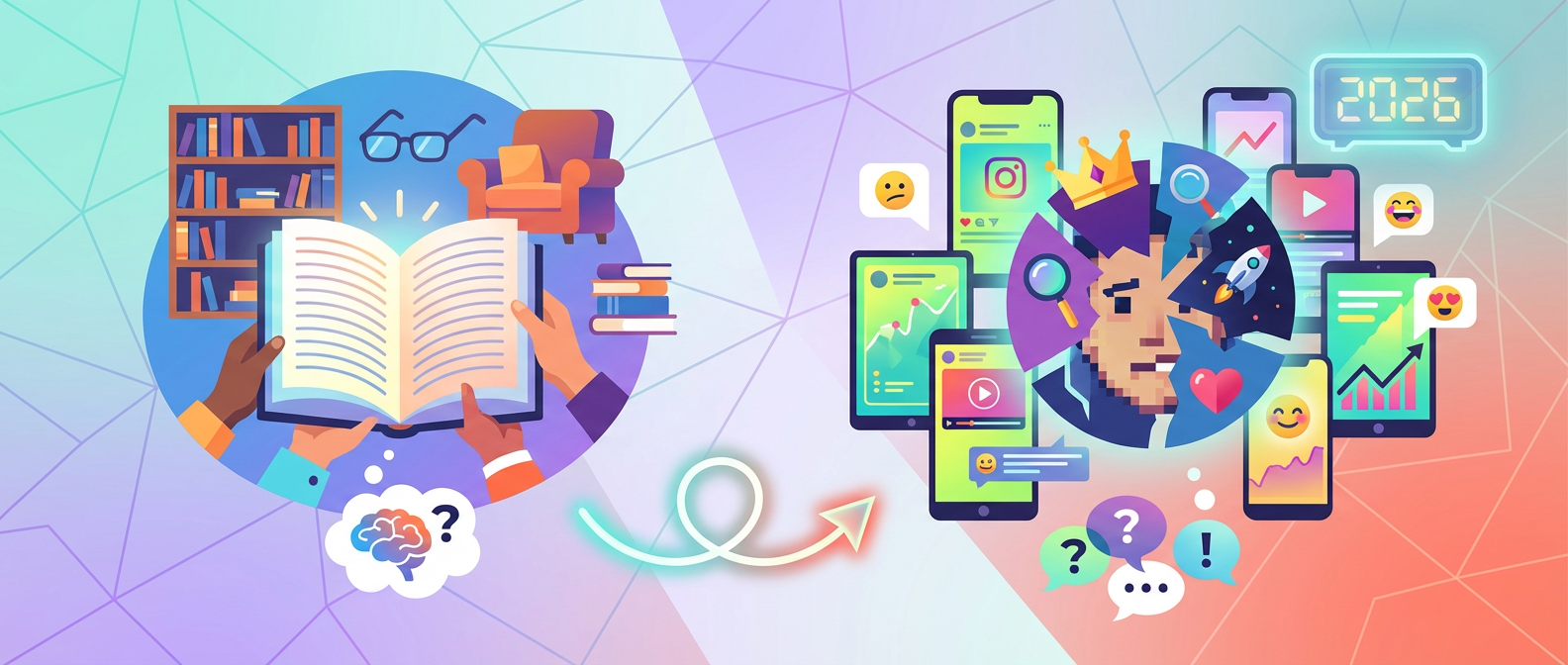
By early 2026, the whole ecosystem is experiencing a full-blown identity crisis. And I’m not being dramatic. The TikTok legal battles brewing throughout 2025 and into this year have fundamentally destabilized the community that BookTok built. According to social media analytics data, creator followings dropped between 20 to 30 percent as users hedged their bets and migrated to other platforms. That’s not a minor shift. That’s an exodus wearing a bookmark like a flag.
Here’s what’s wild: we actually got what we asked for. We wanted books to be social. We wanted reading to feel less lonely. We wanted the barrier to entry demolished. BookTok did all of that. And now that the platform itself is in crisis mode, we’re scrambling to figure out what BookTok even is when the Tok part becomes unstable.

The Great Platform Migration and What It Reveals
When users panic, they diversify. Goodreads saw a 15 percent spike in new sign-ups right at the beginning of 2025 as readers scrambled to establish themselves on platforms that felt safer, more permanent. Bookstagram held steady. YouTube BookTube gained traction. But here’s the thing nobody’s talking about enough: these platforms have completely different constraints, and those constraints are reshaping what kinds of books get discovered and championed.
TikTok’s vertical video format, its 15 to 60-second sweet spot, its algorithm that rewards immediate emotional hooks and relentless editing—all of that created a specific kind of book magnetism. It rewarded books with big feelings and snappy premises. It made romantic tension graphable. It turned plot twists into meme-able moments. Bookstagram’s grid-based aesthetics, meanwhile, reward beautiful covers and cohesive visual storytelling. YouTube’s longer format rewards deep dives, actual criticism, and the kind of recommending where you can explain your reasoning for more than forty-five seconds.
When the future of BookTok after TikTok’s US crisis became a genuine conversation in publishing houses, the major publishers didn’t mourn. They recalculated. Penguin Random House and others shifted their influencer budgets toward Bookstagram and YouTube in their 2025 quarterly reports. Translation: they’re betting on platforms where they can measure impact differently and where the aesthetic is more controllable.
The Numbers Tell a Story About Engagement, Not Reach
The BookTok hashtag had racked up over 250 billion views by late 2025. That sounds enormous until you realize engagement per video is dropping significantly compared to the 2023 peak, when BookTok felt genuinely electric. More reach, less actual interaction. It’s like watching a concert venue get bigger but quieter.
According to a Pew Research Center reading habits study from 2025, 35 percent of adults under thirty who read for pleasure discovered their last book through social media. TikTok and Instagram were basically tied at the top. But that statistic deserves scrutiny. It doesn’t tell us whether those discoveries are sticking, whether they’re converting to actual purchases, whether they’re creating the kind of passionate communities that made BookTok feel special in the first place.
What’s really happening is fragmentation. The community that felt cohesive when it was concentrated on one app is now scattered. Some people are on Threads. Some are riding it out on TikTok despite the uncertainty. Some have retreated to Reddit’s book communities or private Discord servers. Some are genuinely just going back to Goodreads and reading reviews from strangers on the internet like it’s 2008 again. The sense of collective discovery is fractured.
Genre Hierarchies Are Getting Weird in This New Landscape
Here’s what I’ve been thinking about obsessively: the platform migration is collapsing the temporary genre equality that BookTok created. For a hot minute, BookTok treated Colleen Hoover with the same serious respect as Sally Rooney. Paranormal romance got the same algorithmic attention as literary fiction. BookTube, Bookstagram, and Goodreads are more stratified. They have embedded hierarchies. YouTube BookTubers tend to lean toward long-form analysis and literary depth. Bookstagrammers lean toward pretty covers and aesthetically appealing narratives. Goodreads is… Goodreads, which is its own completely unhinged ecosystem.
What concerns me is that we might be losing something genuinely valuable here. BookTok’s greatest gift wasn’t necessarily that it made reading popular again. It’s that it refused to rank genres by prestige. A cozy mystery could trend the same way a psychological thriller could. A sapphic romance could get the same passionate defense as a new literary debut. The algorithm didn’t care about your English teacher’s opinion of what counted as “real literature.”
Now? Publishers are being more strategic about budget allocation. That means some genres are going to get pushed harder on platforms where they photograph well. Some are going to get abandoned because they don’t fit the vertical video format. Some will flourish in YouTube essay comment sections but disappear from mainstream discovery entirely.
What Comes Next Matters More Than Where It Happens
The identity crisis BookTok is experiencing right now isn’t really about TikTok at all. It’s about whether the community that formed can survive platform diaspora. It’s about whether the democratized discovery that felt so different in 2023 and 2024 can exist in a more fragmented landscape. It’s about whether we actually built something sustainable or just rode a wave.
My honest assessment? We’re at an inflection point. The platform migration has given us weird, unintended consequences. Engagement rates are dropping even as reach persists. Creator communities are splintering. Publishers are hedging their bets. But readers are still here. They’re still desperately looking for ways to connect over books. They’re still seeking out communities that feel genuine and non-hierarchical and welcoming to all kinds of stories.
The question isn’t whether BookTok will survive TikTok’s legal battles. The question is what shape book community takes when it’s no longer concentrated on a single app with a single algorithm. And whether we’ll figure out how to preserve the best parts—the genuine enthusiasm, the cross-genre respect, the feeling that you belong in this community no matter what you love to read—while we’re all scattered across different platforms with different constraints and different rules.
What’s your experience been? Have you found your book community on a new platform, or are you still bouncing between apps trying to figure out where to land? I’m genuinely curious how readers are adapting to this moment.