
When a Hashtag Becomes a Publishing Empire
Let me tell you what happened in publishing over the last eighteen months, because it’s the kind of wild, beautiful thing that only emerges when readers get their hands on the infrastructure to amplify their own taste. The #DarkRomance hashtag on TikTok has become a genuine force of nature. We’re talking about growth that went from 4.1 billion views in January 2025 to 8.2 billion by this month. That’s not just viral. That’s a complete recalibration of how books reach people.
But here’s what fascinates me most, and why I wanted to write this down: it’s not that TikTok made dark romance books suddenly exist. They’ve always existed. What changed is that BookTok created a permission structure. A community. A way for readers to say to each other, “I like morally complicated heroes. I like tension that makes my chest tight. I like knowing that love isn’t always soft.” That vulnerability, that honest naming of desire, turned individual reading choices into a collective movement.
The Numbers Are Telling Us Something About Who Reads and What They Want
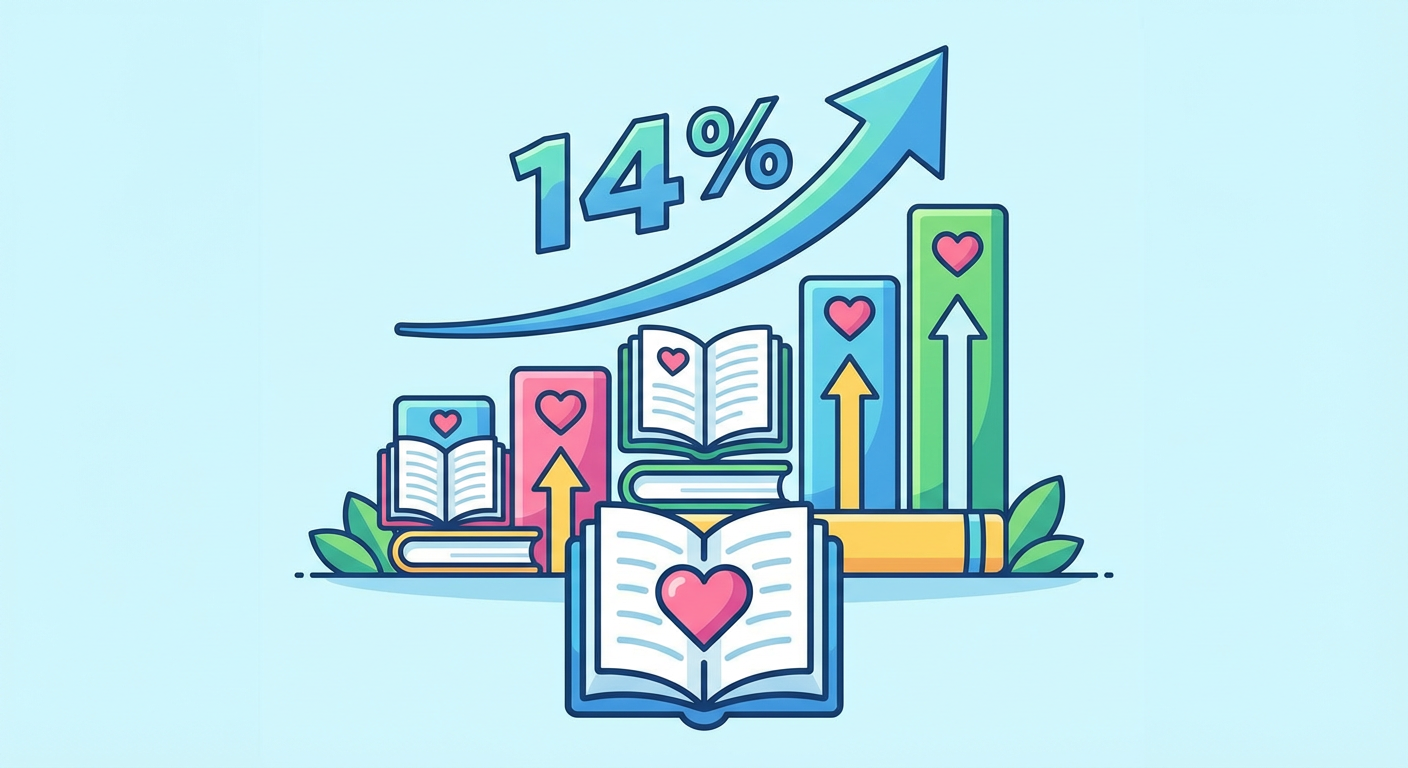
Let’s ground this in actual data, because the specificity matters. According to the Association of American Publishers 2025 StatShot annual report, romance titles drove 22 percent of all adult fiction revenue last year. That’s up from 17 percent in 2023. Two percentage points doesn’t sound dramatic until you realize we’re talking about millions of dollars in the publishing industry. The same report showed that print romance units grew 14 percent year-over-year in 2025, the strongest performance of any fiction category. Everything else was basically flat. Romance wasn’t just growing. It was the growth.
And here’s the thing that really made me sit back: according to Pew Research Center reading and social media habits 2025, 38 percent of Americans aged 18 to 29 said social media directly influenced their last book purchase. Of those, 61 percent cited TikTok specifically. That means teenagers and young adults are literally taking reading recommendations from people they don’t know, then buying books based on what they saw in a sixty-second video. That’s not just marketing. That’s a new distribution channel.
The Author Everyone’s Talking About: How BookTok Deals Actually Get Made
Mid-2025 felt like a turning point for how publishing was going to operate going forward. Ana Huang, who had been building a massive self-published dark romance catalog for years, saw her backlist acquired by Bloom Books in a reported seven-figure deal. But the thing that made this interesting wasn’t the money. It was the timing and the reasoning. Huang’s titles had dominated BookTok for eighteen consecutive months. They weren’t trending because a publisher marketed them aggressively. They were trending because readers couldn’t stop talking about them.
When you read Huang’s work closely, and I mean actually sit with the sentences, the way she builds tension in dialogue, the particular rhythm of her prose, you understand why BookTok latched on. She writes scenes where the emotional stakes are wound so tight that even casual readers can feel the precision of the craftsmanship. The books are page-turners, sure, but they’re also technically accomplished. That combination of accessibility and depth is what makes BookTok recommendations stick. People aren’t recommending books they feel guilty about loving. They’re recommending books that genuinely rewarded their attention.
Why Dark Romance, Why Now: The Sentence as Philosophy
Here’s something I’ve been thinking about: dark romance isn’t new, but the cultural permission to openly desire it is. These books live in the space between what we’re told romance should be and what we actually feel when we’re alone with a book at midnight. The darkness, the morally gray heroes, the power dynamics, the refusal to soften conflict for the sake of niceness, that reflects something real about how young readers are thinking about attraction and desire and risk.
When you examine the actual prose, the reason these books work is structural. Take a typical dark romance beat: instead of a line like “He was dangerous,” Huang or other BookTok favorites might write something like, “I knew I should leave. I reached for the door. My hand shook.” See the difference? The first tells you about danger. The second makes you feel it through the narrator’s specific physical response. That’s the sentence-level work that BookTok readers are responding to, even if they don’t always have the language to describe it. They know when something is earned versus when it’s just declared.
What This Means for Publishing: The Pipeline, The Profit, The Future
Let’s be honest about the business reality underneath all this. Publishers were skeptical about TikTok for years. Social media wasn’t seen as a “real” marketing channel for books. Too frivolous. Too unpredictable. Too young. Now they’re actively reverse-engineering BookTok, looking at what’s trending, acquiring backlists, fast-tracking print editions of self-published titles. The dark romance boom didn’t happen because publishers decided it was time. It happened because millions of readers decided it was time, and publishers had to catch up.
The pipeline is real now. A book trends on TikTok. Reader engagement metrics spike. Publishers notice. Acquisition offers follow. Hardcover deals get made. Physical books end up in bookstores, in airport stands, on nightstands. It’s faster than traditional publishing cycles, and it’s messier, and it means that what sells is determined more by actual reader enthusiasm than by marketing budgets or bookstore placement deals.
If you’ve noticed the dark romance section at your local bookstore has basically exploded, that’s not accident or coincidence. That’s the #DarkRomance hashtag showing up in physical retail space. That’s millions of readers saying what they want to read, and the entire industry reorganizing to meet them there.
What dark romance titles are on your nightstand right now? I’m genuinely curious which books grabbed you and why. Come find me and let’s talk about the sentences that kept you awake.