
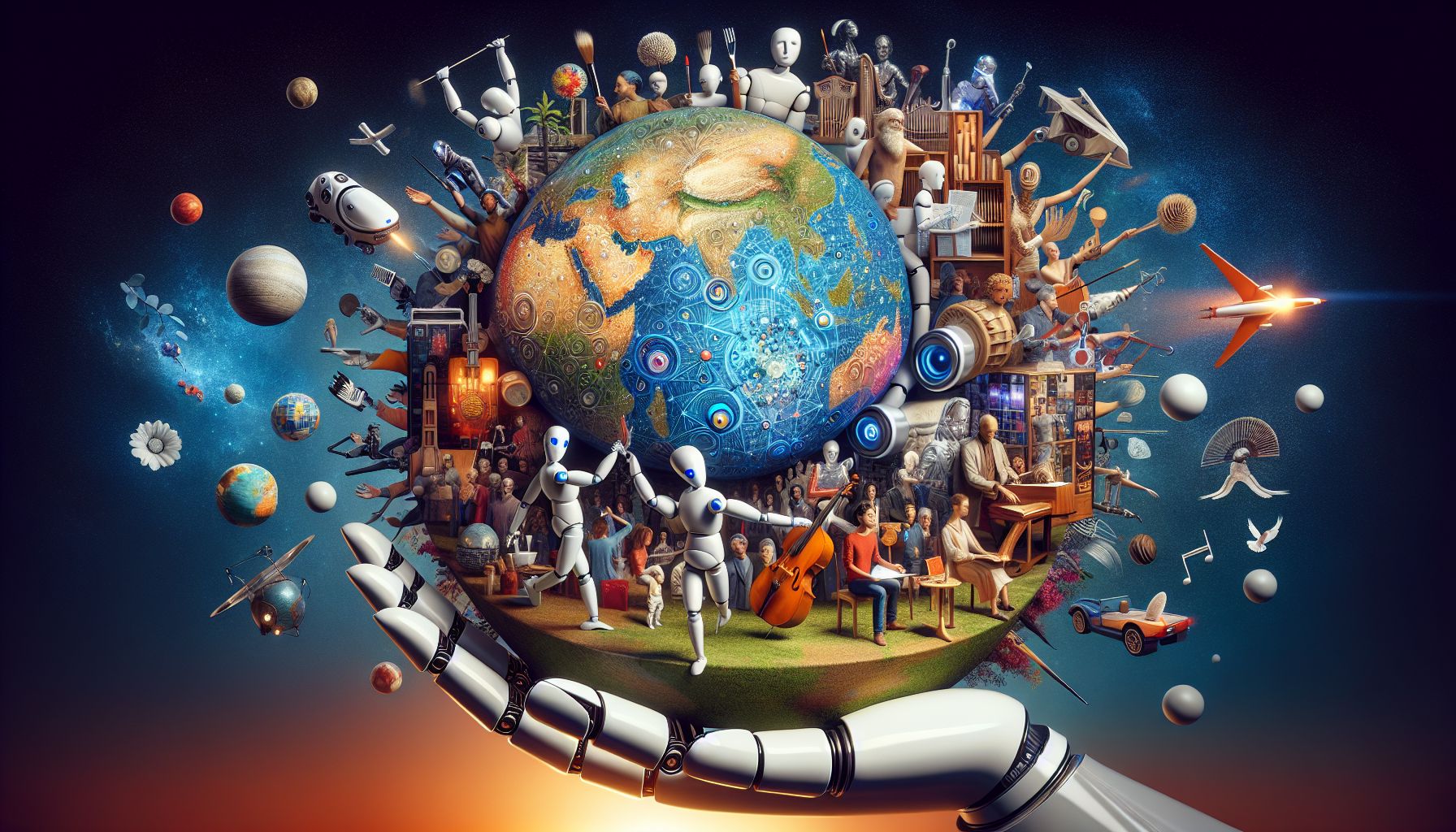
Hey, fellow tech enthusiasts! Gather ’round because today we’re diving into something that’s been sparking endless debates, igniting imaginations, and fundamentally shaking up the world of creativity — Artificial Intelligence in the Creative Arts. Yep, we’re talking about machines messing with the canvas and pen, stitching together symphonies and scripts. To some, it sounds like sacrilege. To others, it’s a techno-utopian dream coming true. Let’s explore why AI in the creative realm has got nerds and artists alike all hyped up.
The Brush Strokes of Algorithms
Before you snort and dismiss AI as some sort of rigid code nitpicking pixel arrangements, have you seen what projects like DALL-E and Midjourney are pulling off? These clever algorithms are playing Picasso on steroids. Seriously, type in “a flamingo dancing the tango with a robot” and watch as your screen becomes a quirky masterpiece. It’s not just about copying existing styles, it’s about generating completely new ones — a fresh perspective from an inhuman mind.
It all starts with the neural networks that “learn” from massive sets of visual data. Companies like OpenAI have been leading this revolution, and their creations have left many of us genuinely surprised. We’re watching machines grasp style, form, and thematic details with artistic skill that really challenges what we think creativity is.
Composing the Symphony of Tomorrow
Art isn’t the only medium feeling the AI shift. Look at how AI is tickling the ivories in music production. Imagine a virtual Beethoven crossed with Daft Punk, hammering out mystical melodies for your earbuds. Companies like AIVA (Artificial Intelligence Virtual Artist) are leading the charge here, crafting original music that’s already found its way into film soundtracks and advertisements. These aren’t bland, toneless tunes but emotional compositions that have folks tapping their feet and losing themselves in harmonies.
The benefit is twofold — musicians get a valuable tool that can inspire collaboration and creation, while producers cut down on repetitive tasks, focusing on the human touch that makes music resonate. Here, AI acts like a magnifying glass, guiding intention and boosting potential.
Scriptwriting Sorcery
Hold onto your screenwriting hats because AI’s got the creative writing sector in a bit of a tizzy. Last year, a group of Harvard scientists challenged an AI to complete Shakespeare’s unfinished “Edward III” — a task like asking a toddler to build LEGO Hogwarts blindfolded. Yet, in a twist worthy of a Hollywood plot, the machine churned out verse after heart-wrenching verse, matching ye olde Bard’s style with eerily poetic precision.
For aspiring screenwriters staring down blank pages, AI can work as a creative co-pilot. Tools stemming from breakthroughs by institutions like MIT are providing plot suggestions, character outlines, and alternative story arcs. So, while we’re not at the stage where Oscar-nominated scripts are machine-crafted, AIs are becoming influential brainstorming buddies that encourage human creativity to reach unexpected heights.
Implications: The Ethical Canvas
Now, before we go full “Starry Night” on AI, we need to throw some skepticism on this techno-colored parade. The ethical implications of AI artistry are vast and messy. Remember the outcry over AI-generated art entries in competitions or debates on whether AI should share artistic credits with its human partners? It’s the Wild West when it comes to ownership and originality.
There’s also the concern over job displacement that every new technology wrestles with. Yet, as history has shown, technology that changes industries often opens up new paths and opportunities. It doesn’t just close doors, it builds more of them. It’s about making AI work as a tool, not as a replacement.
Peering Into the Future: Machine-aided Masterpieces
Predicting where this AI revolution will take us feels like trying to read a book with most pages yet to be written. However, we can indulge in a bit of speculation. Imagine a not-so-distant future where AI systems and creative humans form partnerships. We’re talking about real-time art collaborations where a painter’s brush moves in sync with AI-powered projections, or musicians who improvise with an AI band member in live performances.
Plus, accessibility could reach new heights. Aspiring creators from all walks of life, regardless of resources and background, could wield tools previously exclusive to professionals. Making art more democratic this way ensures that creativity becomes even more inclusive.
Conclusion
So, love it or loathe it, AI’s intrusion into the creative arts is genuinely transformational. We’re watching the beginning of a new era in artistry — one that invites us to rethink what art, music, and stories can become when freed from traditional constraints. For now, it’s all about exploration and experimentation. And honestly, with every pixel, beat, and line, it feels a bit like opening a present you didn’t know you wanted.
Thanks for reading, folks! I’d love to hear your thoughts on this intersection of technology and creativity. Could AI best Da Vinci or hit a musical home run with the Beatles by its side? Drop your musings, and let’s make this a colorful dialogue!