
The Literary Fiction That Felt Like Homework
I made it exactly 127 pages into 2666 before admitting defeat. Roberto Bolaño’s posthumous masterpiece sits on my shelf like a beautiful, intimidating monument to my own literary inadequacy. The prose is gorgeous, the scope ambitious, but somewhere around the fourth academic conference discussion about an obscure German writer, I realized I was reading it because I thought I should, not because I wanted to.
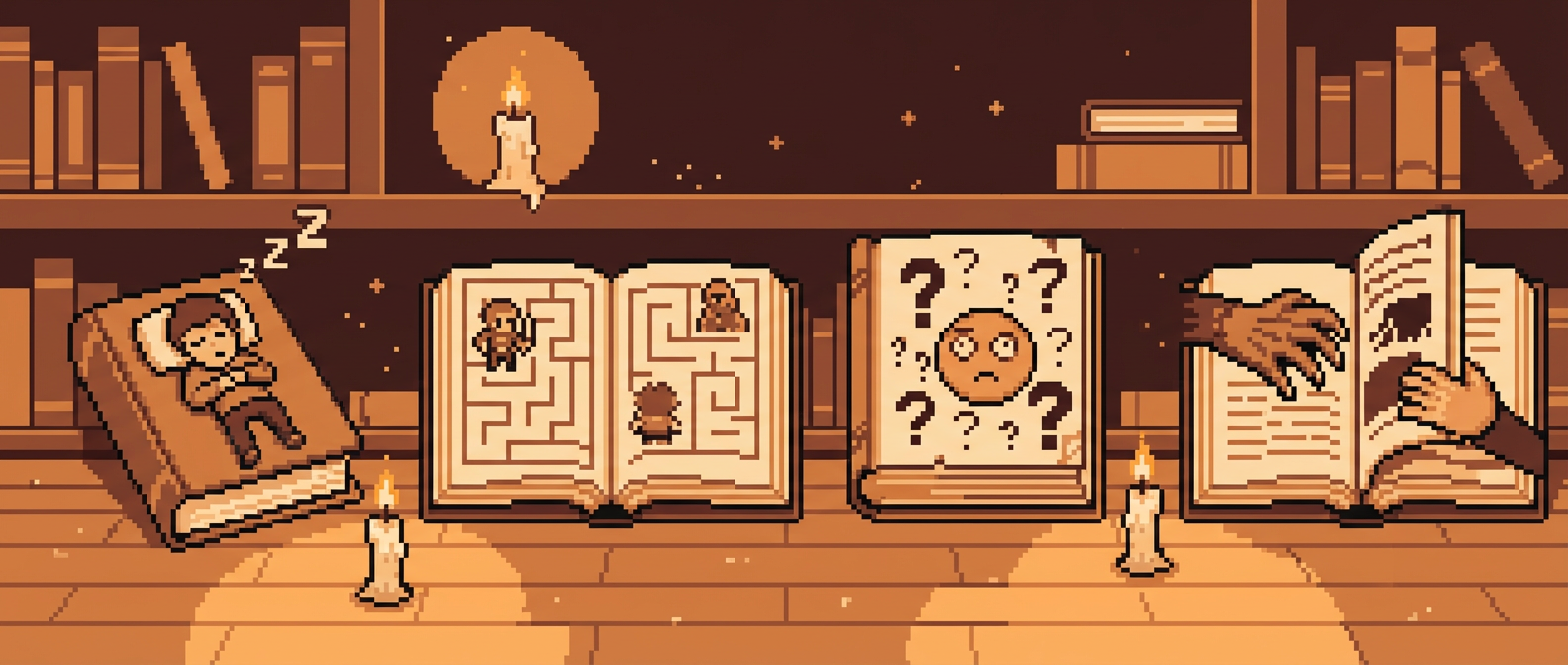
This is literary fiction’s particular trap. The genre demands a certain intellectual rigor, a willingness to sit with discomfort and ambiguity. But those same demands can create distance between reader and text that feels impossible to bridge. When I compare my experience with 2666 to flying through The Left Hand of Darkness, I see how genre can either invite or exclude. Ursula K. Le Guin’s science fiction asks equally complex questions about humanity, but wraps them in narrative momentum that carries you forward even when the ideas challenge you.
The difference isn’t intelligence or sophistication. It’s about how genre conventions shape reader expectations and author obligations. Literary fiction often puts language and theme over plot, which works brilliantly when you’re in the right headspace. But when life is chaos and you need books to be refuge rather than work, those beautiful, meandering sentences can feel like walls instead of windows.
When Fantasy Worlds Became Too Much World
I abandoned Brandon Sanderson’s Mistborn trilogy halfway through the second book, and it wasn’t because the magic system was confusing. Actually, the opposite. Sanderson’s magic systems are marvels of internal logic and complexity, but they require constant mental bandwidth I didn’t have. Every scene demanded I remember seventeen different types of metals, their interactions, the political implications, the historical context.
Fantasy’s worldbuilding expectations have grown ridiculously elaborate. Readers want depth, consistency, full mythologies. But this creates books that function almost like textbooks, requiring active study rather than passive immersion. When I contrast this with something like Mary Stewart’s Merlin books, I see how earlier fantasy trusted readers to fill gaps with imagination rather than exposition.
The irony is that fantasy supposedly offers escape, but modern epic fantasy often demands more cognitive effort than literary fiction. The genre’s evolution toward complexity works beautifully for some readers but leaves others behind. I’m not arguing for simpler books, but acknowledging that genre conventions shape accessibility in ways we don’t always consider.
The Romance That Made Me Question Everything
I quit The Hating Game at 30% because I couldn’t handle watching Lucy let Josh treat her terribly while the narrative insisted this was romantic tension. This wasn’t about the genre’s happy ending requirement or its focus on relationship development. This was about how contemporary romance’s need to maintain sexual tension can sometimes override character agency in ways that make my skin crawl.
Romance operates within strict emotional frameworks that generally work beautifully. The promise of a satisfying relationship arc, the guarantee that love will triumph, the celebration of vulnerability and connection. But when those frameworks clash with modern understandings of healthy relationship dynamics, the reading experience becomes genuinely uncomfortable rather than escapist fun.
Comparing this to something like 99 Percent Mine shows how the same genre conventions can support entirely different power dynamics. Sally Thorne’s book maintains sexual tension while ensuring both characters maintain agency and self-respect. The constraint isn’t the problem. It’s how individual authors navigate within those constraints that determines whether a book works for any given reader.
The Thriller That Forgot to Thrill
I made it through three chapters of The Girl on the Train before realizing I fundamentally disagreed with the book’s approach to unreliable narration. Psychological thrillers live and die by their ability to maintain tension while gradually revealing truth. But when the unreliability feels manipulative rather than revelatory, when withheld information works for plot mechanics rather than character development, the whole structure collapses.
The need to build toward a big reveal shapes every choice in psychological thrillers. Every scene must either advance the mystery or deepen character complexity, ideally both. But this can create narratives that feel constructed rather than organic. When I compare my experience to reading Big Little Lies, I see how Liane Moriarty uses the same conventions to explore character rather than just puzzle-box plotting.
What DNFs Teach Us About Reading
These abandoned books aren’t failures, mine or theirs. They’re mismatches between what I needed as a reader and what these particular books offered within their genre conventions. Every genre develops patterns that work for specific reading experiences. Literary fiction encourages contemplation. Fantasy builds immersive worlds. Romance celebrates emotional connection. Thrillers generate suspense.
But those same conventions can exclude readers whose needs don’t align with genre expectations. The book I can’t finish in January might be exactly what I need in July. The romance that feels suffocating during a difficult relationship might offer perfect comfort when I’m secure. Context matters as much as content.
Understanding why books don’t work for us teaches us as much about reading as understanding why they do. It clarifies our tastes, identifies our needs, and helps us navigate the overwhelming number of available books. Plus, it reminds us that reading is supposed to be pleasurable, not performative. Sometimes the bravest thing you can do as a reader is admit when a book isn’t working for you and move on to one that will.
What books have you DNF’d, and what did they teach you about your reading preferences? I’m always curious about the stories behind our abandoned reads.